
Agile People
A few days ago I took the “Agile People” course with Pia-Maria Thorén, which turned out to be very interesting. It is presented as a radical approach for HR and managers that leads to motivated employees.
Local cultures, global mindsets and employee priorities are changing, which means that management and human resources departments must also evolve. To ensure that teams are well-designed, motivated and successful, managers and HR professionals must step out of their comfort zone and adapt to younger and newer ways of thinking: they must become Agile.
Human Resources and Agile
Regardless of whether I learned more or less things, there is one thing that I highly value as an “output” of the course. This learning has been a new perspective on adapting the Agile culture in an organization, how we can drive an Agile transformation through the HR department.
If Agile is about people (apart from technology and processes), it makes sense that the Agile transformation is led by the Human Resources department (People department). Besides, they are a transversal department to the whole organization, so there is a direct relationship with the other departments. Perhaps due to bad luck, the experience is that this department is a stumbling block when it is led by technology. It may be because of a feeling of loss of control or a rejection of the unknown, or because they have been left out of such a transcendental initiative for the organization; in any case, they do not always support such an initiative to the best of their ability. Fortunately, this situation is beginning to change.
Change is here to stay
In my experience, the problem lies in the processes of that department, not in the people. I am very sure of this, as I have been shown in several trainings with HR people. For example, in a Management 3.0 course, the human resources director of a company with more than 3,000 people told me “this is the same thing that those of us who live human resources as a service for our colleagues have tried to implement. But now you have a fresher look and I see many options to help us in our organization to extend Agile”. Agile doesn’t really invent anything, but uses empiricism to test, respond, learn and adapt with the intention of maximizing value.
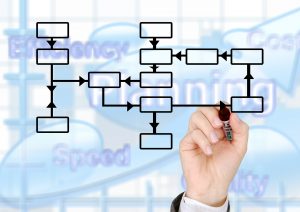
This department in its origins, in companies that are just starting out, is small and very flexible, bearing in mind that the focus is on the employees. As companies grow, departments are no longer flexible, all their processes are mapped, and the center of the department is the processes.
A first step towards Agile transformations is for the department itself to integrate this Agile mindset. Agile methodologies seek flexibility, learning, adapting and responding to change. By adopting Agile in this department, we will once again have an HR team focused on delivering value to employees.
Agile HR
The typical functions of the Human Resources department are:
- Vision
- Performance management
- Recruitment
- Succession planning
- Job descriptions (job descriptions)
- Individual Development Plans (IDP)
- Training (Learning)
- Salaries and benefits
- Leadership programs
- Motivation and commitment
With this new approach, the team’s functions will remain the same. The big change lies in how these different areas are approached under the new umbrella of an Agile mindset.
By adopting this Agile culture in the People department, we will be able to respond to the needs of the organization and its employees quickly and satisfactorily. Once we have achieved Agile HR, we can support the adoption of Agile by the rest of the company.
No one says it will be easy, and it won’t be. The difference is that we will start with the advantage of starting in a department that is transversal to the entire organization.