
Data culture vs. intuition: The key to an AI-enabled organizational culture
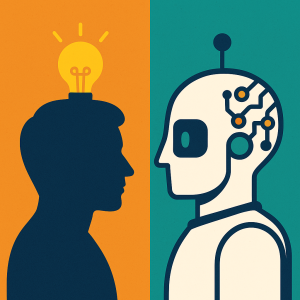
For years, decisions in companies have been made based on the experience and the “nose” of the leaders. Today, with artificial intelligence processing thousands of variables in seconds, an uncomfortable question arises: What weighs more in your organization, intuition or data objectivity?
The truth is that neither can walk alone. The current challenge of organizational culture with AI is not to choose one or the other, but to learn how to integrate both worlds.
The culture of experience: the value of intuition
Experience is not taught on a dashboard. It is gained in the street (sorry, in the office), in negotiations, in repeated mistakes and in victories suffered.
In a culture of experiencedecisions are based on:
- ContextA CFO who has survived several crises detects signs of risk that the numbers do not yet reflect.
- RelationshipsA veteran salesperson knows when to “push” or when to shut up to close a deal.
- IntuitionThe ability to anticipate without having all the facts.
It is an intangible asset that remains powerful. The risk, however, is to fall into the trap of “this is the way it has always been done here”.
Data culture: objectivity and speed
The data cultureon the other hand, is based on an irrefutable premise: what is not measured, cannot be improved.
With AI at its core, it offers advantages that are hard to ignore:
- ObjectivityDecisions based on facts, not perceptions.
- Speed: An algorithm can evaluate in minutes what would take a committee weeks.
- AccuracyAnticipates patterns that no human could detect.
- ScalabilityThe same decision logic can be applied to thousands of cases simultaneously.
Real-world example: a human resources team in Madrid uses AI to analyze employee turnover. They discover that it’s not about salaries, but about lack of career development. That evidence changes the talent retention strategy.
When two cultures collide
Here comes the tension:
- The senior feels his judgment is challenged by “cold numbers.”
- The junior blindly trusts dashboards and underestimates intuition.
- The management tries to orchestrate a coexistence that avoids internal wars.
This crash is not a technical problem. It is a profound cultural change. And this is where the key comes into play: data-driven business culture must be built on collaboration, not substitution..
How AI transforms decision making
Artificial intelligence is not coming to replace expertise; it is coming to enhance it. Its impact on data-driven decision making is clear:
- Reduce biases: AI combats unconscious bias in selection or promotion processes.
- Provides speed: Allows faster reactions in rapidly changing markets.
- Personalize: Helps tailor decisions to specific customer or employee segments.
- Empower teams: Information ceases to be exclusive to the top management and reaches all levels of the organization.
In short: AI democratizes the power to decide.
Best practices for integrating experience and data
How to make both cultures coexist without friction? Here are some keys:
- Data literacy training: Everyone in the company should understand the basics of reading and interpreting data.
- Encourage hybrid teams: Combine analytical profiles with business professionals who contribute their expertise.
- Establish clear rules: Define in which scenarios data is a priority and in which ones intuition should guide the decision.
- Avoid the “dictatorship of the dashboard“: Data is a compass, not an oracle.
- Celebrate complementarity: Showcase success stories where the combination of intuition and data generated the best decision.
Frameworks that accelerate cultural change
Adopting an AI-enabled organizational culture is easier when supported by agile frameworks:
- OKRs → Clear objectives linked to measurable metrics. (Step-by-step guide here).
- Scrum → Constant review based on evidence. The Scrum Guide itself reinforces this.
- Product Backlog Management → Prioritization based on impact and data, not just intuition (read more in this article).
These frameworks make data a natural part of everyday life.
Case study: an insurance company in Bilbao
An insurer in Bilbao had been relying on the intuition of its senior agents for years. AI introduced a massive analysis of customer patterns:
- Finding → Young people rejected traditional products because they perceived them to be rigid.
- Action → Designed more flexible digital policies.
- Result → 23% increase in hires in one year.
But most interestingly, the senior agents were involved in the design of the communication, contributing their knowledge of the client. Success came from the combination.
The new power is in the balance
The “data vs. experience” debate is a false dilemma. In reality, the the power of the future lies in balance:
- Data provides objectivity and agility.
- Experience provides context, intuition and humanity.
- AI functions as a cultural glue, catalyzing profound change.
The real leap is not technological, it is cultural. It is about creating an organizational culture where data illuminate and experience inspires.
Want to further explore how to transform your organization’s culture with AI and data? Subscribe to our newsletter The Smart Drop and receive weekly practical ideas to lead the change.