
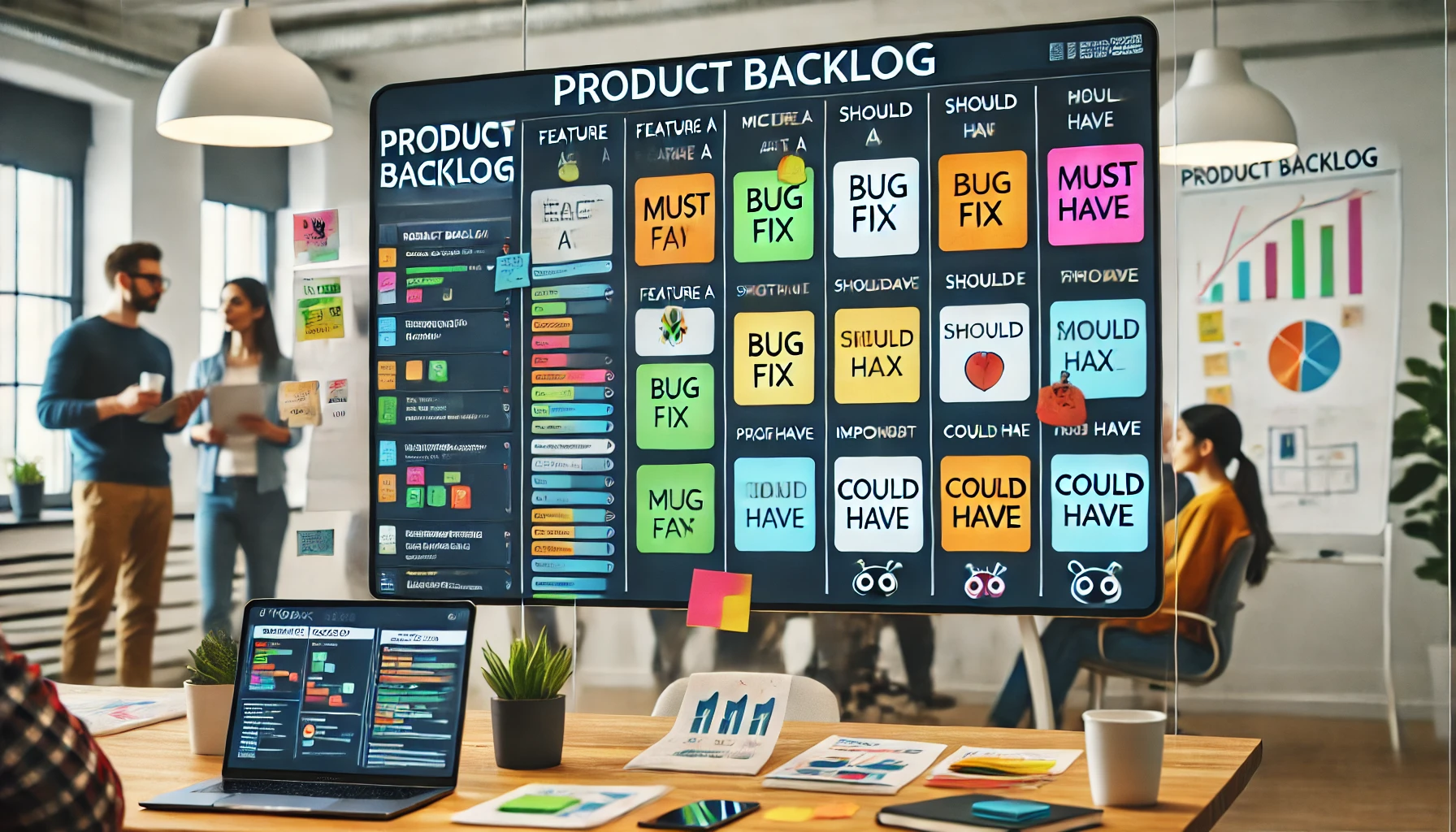
You are on a project and… do you feel that everything is a priority and that tasks are piling up? If so, it’s time to define priorities and manage your backlog.
In agile development, the product backlog management or backlog management is key to maintain, on a continuous basis, the focus on objectives, adjusting priorities of the product or project in a . dynamic and efficient. And thus, make the most of the resources in each sprint. Achieving this is almost an art.
Stay with us and we will explain what the product backlog is, how it is organized and prioritized, how it is managed and who is responsible for each step. And all this, without losing your head.
Let’s get started!
What is a Product Backlog?
A product backlog is a list of list prioritized and dynamic (it changes every sprint) list of the features, enhancements y requirements for the product or project being undertaken. It functions as the sole source of work for the team. No more, no less. Simple, isn’t it?
And the most important thing: each team has a unique Product Backlog. You cannot have multiple sources of work. All sources of demand must be integrated to prioritize and make targets visible in an appropriate way. This action also improves the teams’ workflow.
What does backlog mean in project management?
In project management a backlog is a list of all the tasks still to be performed within the project, prioritized to help bring the project to a successful completion in the most efficient way possible.
In agile agileThe backlog takes on a different role: it is not just a list of tasks, but all the ideas, features and potential improvements to the product. Here, each item is prioritized with the goal of providing incremental value, ensuring continuous delivery aligned with user needs.This approach not only improves the organization, but allows teams to have a continuous delivery of value, especially in teams working under methodologies like Scrum o Kanban.
Product Backlog management and organization
Manage the Product Backlog It is NOT about making an endless to-do list. It is about organizing, prioritizing and evaluating each task to understand its true value in the project.
Through the Product Backlog managementteams identify the tasks that really matter and add value, adding only the elements needed to move in the right direction. And so, they optimize the time and resources used.
Achieving this… is quite an art.
Who is responsible for ordering the product backlog?
The Product Owner (PO) is directly responsible for ordering the backlog items. This responsibility involves prioritizing according to the product vision, taking into account business needs, technical feasibility and stakeholder feedback.
However, prioritizing does not mean deciding in isolation. Prioritization is carried out together with S takeholders as well as with the rest of the people involved in the team. All areas (business, technology, marketing…) must be aligned and priorities well understood to avoid waste and maximize value.
The definition of priorities and the ordering of each item is an exercise of total transparency. full transparency.
How to organize the elements in the backlog?
To organize and prioritize a backlog, there are several techniques to maximize the value of each task to the user and the business. Not everything can be developed at once, so prioritization is essential to ensure that the team is focused on what really makes a difference. In addition, these techniques help eliminate tasks that don’t contribute as much and could be just a waste of time and resources.
These are some of the most commonly used techniques:
- RICERICE: This technique takes into account four factors: Reach (Reach), Impact (impact), Confidence (and Effort (effort). Basically, you give a score to each task according to how many users will be affected, the level of impact, how confident you are of the estimates and the effort involved. This way, you get to prioritize objectively, putting the team to work on what really matters.
- WSJF (Weighted Shortest Job First)This technique is based on prioritizing those tasks that provide the most value in relation to the effort required. The value to the business, the value to the user, and the size or effort required are analyzed, and a score is calculated for each task. With this score, you ensure that the team focuses on what has the greatest return in the short term, minimizing the opportunity cost.
- Business ValueWe focus on the value that each task brings directly to the business. We evaluate each item according to its potential to increase revenue, reduce costs or improve customer satisfaction. It is a simple and easy to understand technique, but it has the challenge of being somewhat subjective, as what is considered “business value” can vary depending on who is looking at it.
With these techniques, the Product Backlog Management becomes a strategic tool that allows you to keep the team focused on what is most important, maximizing the value delivered to the user and optimizing the use of resources to get to market as quickly as possible.
Discover the elements and attributes of the Product Backlog with examples
To effectively manage the product backlogeach item – known as a product backlog item (PBI)– should have clear and easy-to-understand attributes that facilitate prioritization and execution. These attributes allow the team to assess the value, effort required and priority of each task, ensuring that the backlog remains aligned with the product objectives. This also facilitates transparency.
Every GDP should have:
- Job DescriptionWhat needs to be done? For example, “develop password reset functionality”. Precise description so that any team member can understand the task without ambiguity.
- Expected valueWhat’s in it for us? What’s in it for us? It can be a new functionality, a solution to a bug, or a performance improvement. For example, “increase the conversion rate”.
- Acceptance criteria: What must be fulfilled to be considered OK? Defines the conditions that must be met for the item to be functional and can be considered completed.
- Estimated effortHow much does it cost us to do it? It can be measured in estimated hours or in story points. Attributing an estimated effort helps to manage the team’s time and resources, avoiding overloading the sprint.
- PriorityHow urgent is it to be done? The priority should be aligned with the impact of the item. High priority usually goes hand in hand with high value/impact (and vice versa).
- Additional informationAny additional details such as the necessary graphic design, feedback from users of previous items, dependencies… Anything that helps to make the item and to ensure that each task is ready to be worked on without delays.
When is a Product Backlog item considered complete?
A backlog item or PBI is considered complete when it meets the acceptance criteria defined by the team and is ready to be deployed, delivered to the customer or integrated into the product. In other words, it is the team that finalizes an item.
This state is reached after validation and feedback from Stakeholders (throughout the sprint or in the Sprint Review sessions), ensuring that the element meets the required quality and functionality standards. Transparency and feedback between the different actors involved (team, Stakeholders…) is key to establish these criteria.
Who is responsible for the size of the Product Backlog items?
The responsibility for defining the size of backlog items rests with the backlog team. on the team in collaboration with the Product Owner. Through practices such as Planning Poker o effort estimation technique (how much did something similar cost us last time?), the team estimates the size of each task.
This estimate is key to determine the scope of each sprint and avoid accumulating too large a backlog. The capacity in each sprint is finite, so it is important to invest sufficient time when defining the size of each item.
Tools and practices for backlog management
In the market there are multiple tools that simplify backlog management in a collaborative and transparent environment for the work team. These tools allow to register and classify tasks in an agile and online way, keeping everyone involved aligned with the purposes of the project.
Currently, the most popular platforms for agile software development and other types of projects are Jira and Trello; these Atlassian tools facilitate transparent online collaborative backlog management and optimization.
Refinement of backlog and feedback from stakeholders
The backlog refinement process is an important meeting that teams use to keep the backlog updated and organized. During these recurring sessions (e.g. weekly), backlog items are reviewed and prioritized taking into account stakeholder feedback and thus adapting to the changing needs of the project. These sessions usually last about 2 hours and involve all team members.
Conclusion
The backlog management is key to ensuring focus and maintaining direction in agile projects. A backlog organized by priorities clear priorities and in collaboration with all key roles, enables teams to move faster and more efficiently towards delivering a quality product.