Emulating Gustavo Adolfo Bécquer: “What is Business Agility? And you ask me…”.
In this article we want to share, from our experience at SmartWay, what is Business Agility, what are its six fundamental dimensions and how it can help you accelerate innovation and adaptability in your organization. It is not an abstract theory: these are ideas applicable to day-to-day business.
What is Business Agility?
We like to define Business Agility as the organizational ability to learn, adapt and evolve business strategy so that it can deliver value quickly and thrive in changing markets.
However, business agility is not a course or a plug-and-play tool. It is not activated by one-off training. In our view, it is an organizational skill that is built over time, with practice and with real commitment from the entire enterprise.
Adopting Business Agility means initiating a profound process of organizational transformation. And why would a company want to transform itself?
- To respond with agility to changes in the environment
- To deal with more complex products or services
- To design solutions that the customer really wants
- To become an innovative organization
- To rethink its organizational model
From our Agile consulting, we help to activate this change with a combination of strategic focus and practical action.
The 6 dimensions of Business Agility
Business agility, from our point of view, is built on six areas that complement each other. It is not a matter of developing them all at the same time or in a linear fashion, but of understanding that together they reinforce a more adaptive and innovative culture.
The six dimensions that make up Business Agility are:
- Customer Centricity
- Customer Experience
- Agile
- Lean
- Design Thinking
- Innovation Portfolio

Below, we explain how each of them contributes.
Customer Centricity
When we ask in many organizations what is most important, the answer is usually “the customer”. But when you look at how decisions are made, it’s often all about the budget for the quarter.
That gives us a clear clue that the customer is not always really at the center.
Customer Centricity means designing strategy, products and processes from the customer’s point of view. Listen more, assume less.
How do we apply it?
- Making decisions that benefit the customer in the long term
- Considering the customer as an end in itself, not a means.
- Measuring value from your perspective, not just the internal one
- Using tools such as the Empathy Map to understand emotions and behaviors
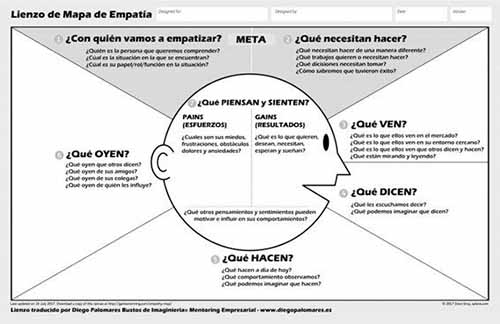
This approach is key in the projects we develop at SmartWay, where every strategic decision is based on the client’s understanding.
Customer experience
Customer experience is one of the best levers to initiate real organizational change.
We are talking about all the moments in which a user interacts with the company: from the moment he discovers the brand until he buys, receives the product, and returns or not.
Tools such as the User Journey Map allow us to:
- See what the customer experiences at each stage
- Detect friction points
- Improving the experience to be clearer, smoother and more consistent
Working on the customer experience forces the entire organization to think from the outside in. And that is already agile culture.
Working on the customer experience forces the entire organization to think from the outside in. And that is already agile culture.
Agile
Agile is not just a set of frameworks like Scrum, Kanban or SAFe. For us, Agile is a way of thinking and acting.
It is based on values such as:
- Iteratively deliver value
- Collaboration between teams
- Adapt as the context changes
- Continuous improvement as an organizational habit

From our Agile consulting, we accompany teams and leaders in the development of this mindset with frameworks and practices adapted to each organization.
Lean
Lean is common sense well applied. Born in the Toyota production system, it seeks to do more with less, without losing quality.
We like to think that Lean is not just about efficiency: it’s about focus. It’s understanding what adds value and eliminating everything that distracts from it.
Key principles we apply:
- Understand what the customer values
- Eliminate tasks that do not contribute
- Continuous improvement
- Empowering teams
- Solving root problems
Implementing Lean, as we do from our Agile consulting at SmartWay, aligns teams around purpose and improves overall performance.
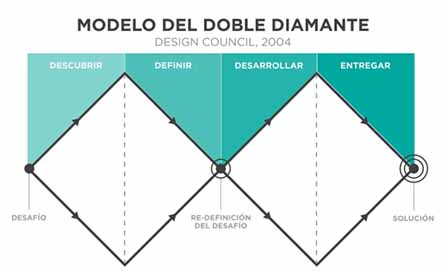
Design Thinking
Design Thinking is solving problems from people, not from the logic of processes. It forces us to listen before designing, and to empathize before executing.
Its structure includes:
- Empathize
- Define
- Idear
- Prototyping
- Test
This approach democratizes innovation: you don’t need to be a designer, you just need to want to solve real problems. In many of our processes, we use Design Thinking as a gateway to agility.
Innovation Portfolio
To innovate with impact, you need a system. And that is what the Innovation Portfolio offers us.
Managing innovation as a portfolio of projects allows:
- Balancing risk and time
- Prioritize resources
- Visualize the ideas we are working on
- Avoid improvisations and chaotic approaches
At SmartWay we help to structure this portfolio by differentiating between:
- Incremental innovation
- Adjacent innovation
- Disruptive innovation
A good portfolio protects the present and prepares for the future.
Benefits of adopting Business Agility
From our experience in SmartWay, the organizations that bet on Business Agility achieve the following:
- Getting to market sooner
- Adapt more quickly to changes
- Design products with more value for the customer
- Motivating teams with purpose
- Building customer loyalty and generating long-term relationships
SmartWay’ s Agile consulting transforms these capabilities into real results.
Why Business Agility adoption fails
Many organizations fail when trying to be agile. Why?
- Because it takes time and is not a superficial change
- Because what is urgent covers what is important, and transformation needs focus and constancy
There is an image that sums it up well: a cart with square wheels. And when someone offers round wheels, the answer is: “we don’t have time”.
Agility and innovation: two sides of the same coin
Innovation doesn’t come out of nowhere. It is not luck or a stroke of genius in the shower. It is the consequence of having an organization prepared to detect opportunities, learn quickly and adapt.
In other words: an agile organization.

An agile company:
- Listen to your customers
- Collaborates in a cross-cutting manner
- Adapts intelligently
- Explores and keeps new ideas alive
And at SmartWay we know that this does not happen by chance. It is the result of a system designed to allow innovation to occur naturally and sustainably.
Conclusion
Business Agility is not a fad.
It is a way of organizing to survive the present and invent the future.
At SmartWay we have been helping organizations along this path for years. And if you are also ready to start, discover how we work in our Agile consulting.